Historic Winter Trades to be Demonstrated on February 21 at PoCo Muse Event

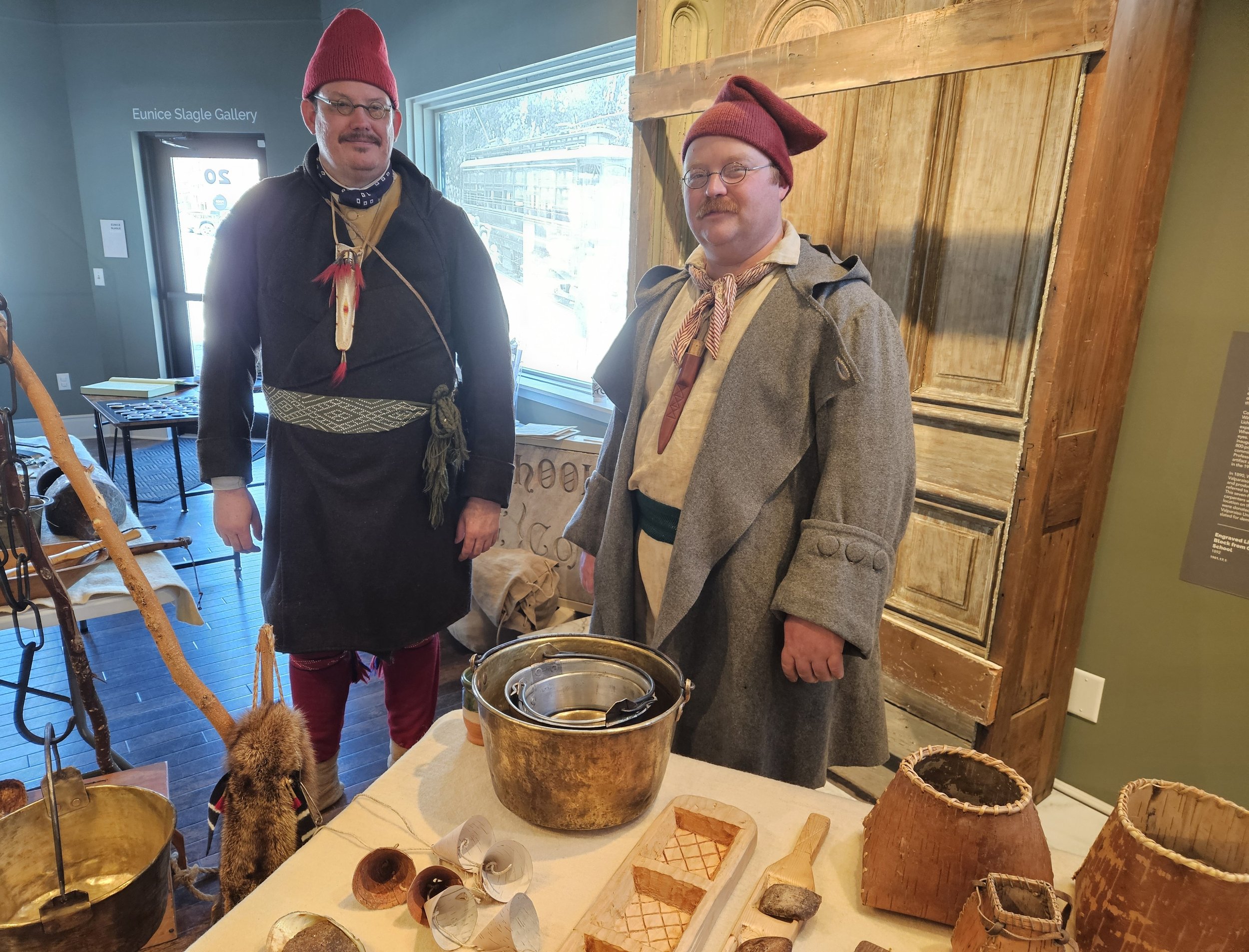
History interpreters Tom Wojcinski and Ian Baker with artifacts and tools associated with traditional maple sugaring.

Porter County Museum (PoCo Muse) will host a public event about historic winter trades on Saturday, February 21, from 10am to 2pm. Living-history interpreters dressed in period garb will describe and demonstrate techniques used by both European settlers and indigenous peoples in our area during the eighteenth and nineteenth centuries. The program is interactive, family-friendly, and free of charge.

“Join our band of living-history interpreters for a wintertime showcase of historic trades,” said Executive Director Kevin Matthew Pazour. “Collecting maple sap to produce syrup was once an important industry in Porter County; maple sugar was the primary sweetener in North America until the nineteenth century. The production process could only be accomplished during a short window in mid-winter. Also on display at the event will be other tasks, including traditional leatherworking and candle making, that were usually undertaken indoors once the agricultural season was over.”

“We have spent years researching these aspects of our local history,” said veteran reenactor Ian Baker of Michigan City. “Many artifacts representing the tools of these trades will be on display, and we encourage visitors to ask questions and interact with the interpreters. The program is an open house; drop by at any time during the event hours. If the weather cooperates, we may demonstrate some activities outdoors.”

“Don’t miss the opportunity during your visit to have a look at the exhibits currently on display at the PoCo Muse Muse,” suggested Pazour. “From a Bailly Point of View, tells the story of the pioneer Bailly family through objects that they owned. Joseph Bailly, whose homestead is preserved at Indiana Dunes National Park, was the first Porter County settler of European descent. The Cain Gallery celebrates the Hillstrom Organ Works which manufactured musical instruments in Chesterton from 1880 to 1913, selling them to customers all over the world. You can also check for the names of family members on the Lowenstine World War II Roll of Honor.”

History interpreter Tom Wojcinski pointing out tools used in maple sugar production.

Porter County Museum, located at 20 Indiana Avenue in downtown Valparaiso, is open six days a week, Tuesday-Sunday, from 11am to 5pm, with free admission. Free half-hour guided tours are offered on the third Saturday of each month at 10am. For more information, visit pocomuse.org or find @pocomuse on social media.

The Iconic Hillstrom Organ Works of Chesterton is Feature of New PoCo Muse Exhibit

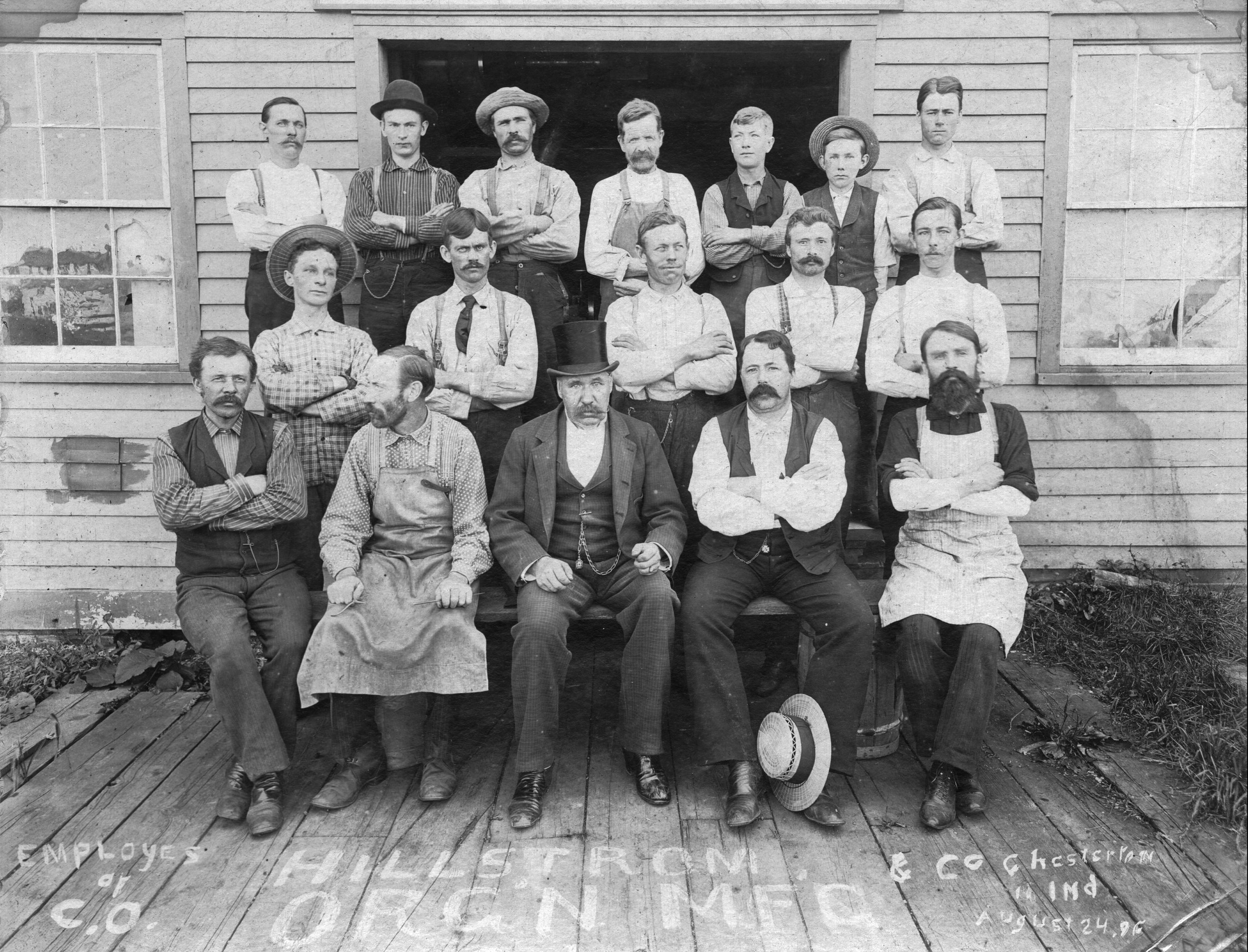
Hillstrom Organ Company Employees, August 24, 1895. Courtesy of the Westchester Township History Museum.

Porter County Museum (PoCo Muse) will open an exhibit on February 19 that tells the story of the Hillstrom Organ Works, which produced the popular musical instruments at its Chesterton factory from 1880 to 1913. Founded by a Swedish immigrant from Chicago, the company became a major employer and played a key role in the Swedish community in northern Porter County.

“Swedish immigrant Charles Oscar Hillstrom learned to make organs while still in his home country,” said Executive Director Kevin Matthew Pazour. “Not long after arriving in Chicago, he founded the Hillstrom Organ Works. In 1880, Hillstrom moved his business to Chesterton, attracted by the availability of native trees for organ case construction and well-established railroad lines. The company became the economic pride of Chesterton. It produced some 40,000 reed organs over its years of operation, shipping them across the United States and around the world. Hillstrom even sent one to the King of Sweden as a gift.”

“We are proud to have a fine example of a Hillstrom organ in our collection,” said Hannah Sliekers, the museum’s Collections Fellow. “It will be the centerpiece of our exhibit. Hillstrom organs were popular with missionaries in diverse climates, because they were lightweight and asserted to be resistant to mildew and rodent infestation. Many churches and private homes in the United States boasted of a Hillstrom organ. Wherever one was found, it was considered a manifestation of beauty and faith.”

“While you’re at the museum, take the time to view our ongoing featured exhibition, From a Bailly Point ofView,” added Pazour. “It tells the story of the pioneer Bailly family through objects that they owned. Joseph Bailly, whose homestead is preserved at Indiana Dunes National Park, was the first Porter County settler of European descent. One of Bailly’s sons-in-law was instrumental in bringing Swedish immigrants, like Hillstrom and his workers, to Chesterton by selling land and offering employment opportunities.”

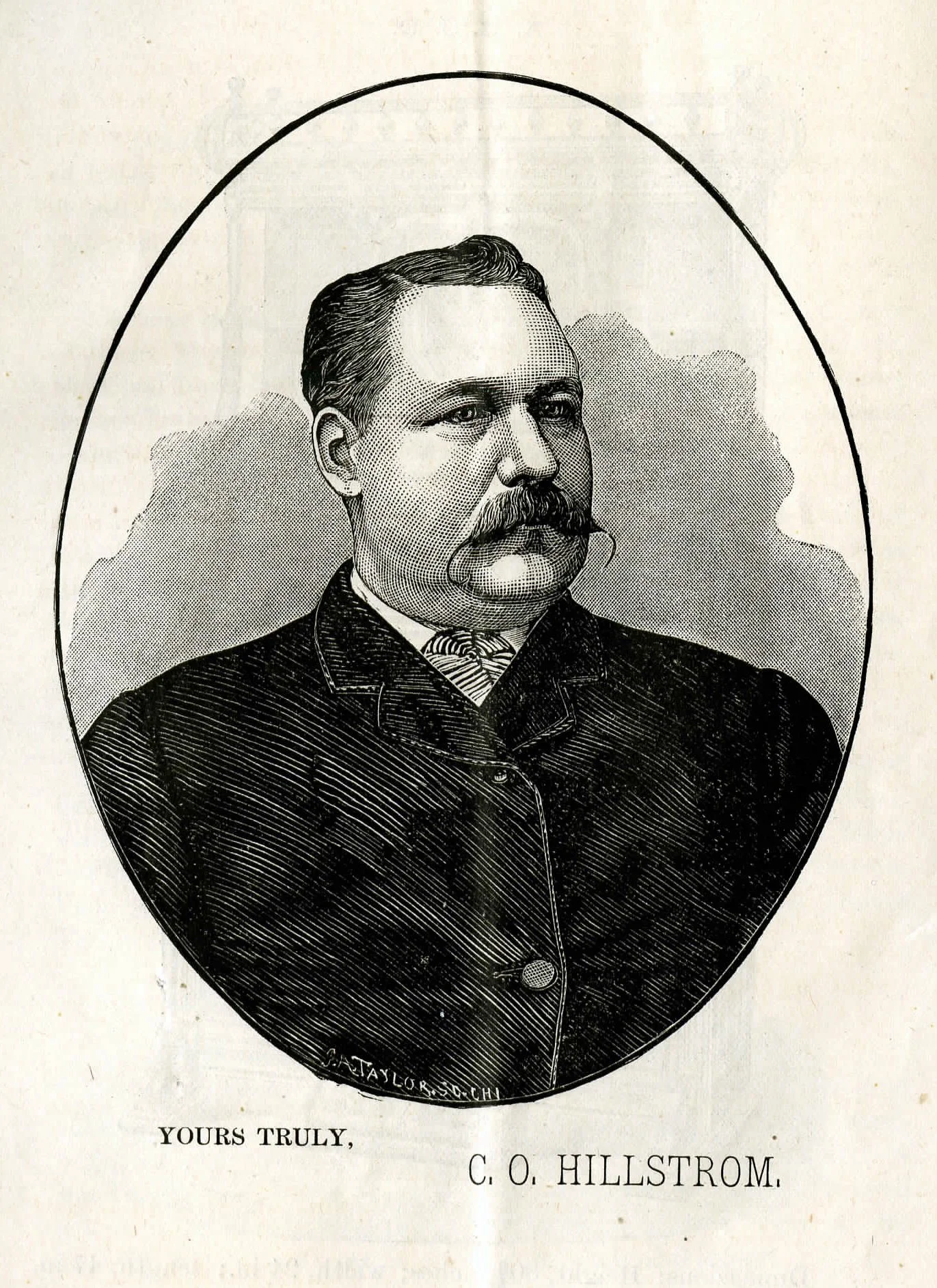
Swedish Immigrant Charles Oscar Hillstrom founded the organ company in 1880.

Porter County Museum, located at 20 Indiana Avenue in downtown Valparaiso, is open six days a week, Tuesday-Sunday, from 11am to 5pm, with free admission. Free half-hour guided tours are offered on the third Saturday of each month at 10am. For more information, visit pocomuse.org or find @pocomuse on social media.

Voyageur Reenactors to Appear at PoCo Muse December 6

Living history reenactor Tom Wojcinski portraying a 19th-century voyageur

Porter County Museum (PoCo Muse) will host historical reenactors portraying fur traders, commonly called voyageurs, who worked with Joseph Bailly, Porter County’s first non-native settler, in the early 1800s. The free event will be held Saturday, December 6, from 11am to 6pm. The interpreters appear in conjunction with the museum’s current featured exhibit, “From a Bailly Point of View.” Visitors are encouraged to ask questions during this interactive event.

Tom Wojcinski of Hammond will be at the museum for 11am to 4pm. He’ll be dressed in period clothing and will explain the work of the voyageurs through a variety of artifacts. “Joseph Bailly established himself as a prominent merchant in the Old Northwest Territory,” said Wojcinski. “Acting as a middleman, buying and stocking European manufactured goods in his many posts, including one along the Little Calumet River in Porter County, he exchanged these goods with the Native peoples for animal furs they harvested, which were then sold back to buyers in Europe. Bailly hired men to trade for him; they have become known as voyageurs.”

“One of the treasures of our collection of Bailly artifacts is an original ledger written by Joseph Bailly from 1799 to 1802,” said Executive Director Kevin Matthew Pazour. “In this account book—all of which is in French—Bailly recorded the goods that he purchased, the goods that he sold, and the furs or skins he received from his Native trading partners. We invite you to come see Joseph Bailly's ledger brought to life and view the items bought and sold at his trading post on June 6, 1799. See how these goods would have appeared when new and learn how the North American fur trade was an enormously important system of global commerce.”

“Historical interpreter Ian Baker of Michigan City, also dressed as a voyageur, will be available to answer questions during the museum’s Yuletide Open House from 3pm to 6pm that same day,” added Pazour. “It’s a great opportunity to add history and fun to your activities during the city’s Holly Days celebration. While you’re at the museum, have a look at the new acquisitions and artworks from our permanent collection now on display in the Robert Cain Gallery.”


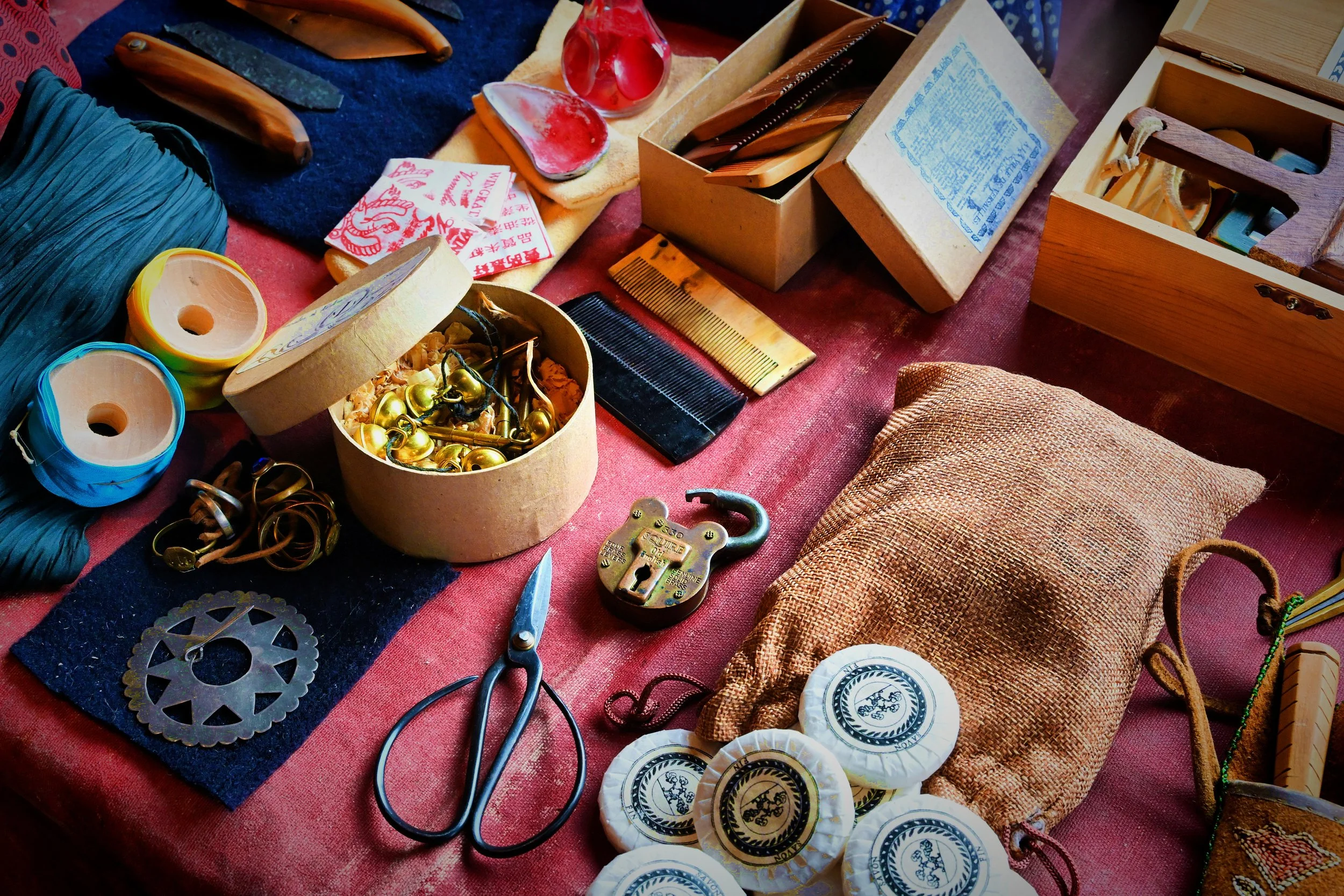
Samples of goods that would have been available at Joseph Bailly's trading post

Porter County Museum, located at 20 Indiana Avenue in downtown Valparaiso, is open six days a week, Tuesday-Sunday, from 11am to 5pm, with free admission. Free half-hour guided tours are offered on the third Saturday of each month at 10am. For more information, visit pocomuse.org or find @pocomuse on social media.

PoCo Muse Exhibit Features Family of Joseph Bailly, Porter County’s First Non-Native Settler

Eunice Slagle Gallery glimpse of From a Bailly Point of View at the Porter County Museum

Porter County Museum (PoCo Muse) currently has on display an exhibit that tells the story of the pioneer Bailly Family through objects that they owned. “From a Bailly Point of View” occupies the Eunice Slagle and Montague/Urschel Galleries; it will run through April 26, 2026.

“Though Joseph Bailly looms large in the memory of Porter County as its first non-native settler,” said Executive Director Kevin Matthew Pazour, “the lives and work of three generations of Bailly women - notably his widow Marie, daughter Rose, and granddaughter Frances - truly shaped the family’s legacy. The Baillys’ history is full of gritty truths and romantic mythmaking. Its mixed Native American-European heritage and its commitment to Roman Catholicism are key elements of the story.”

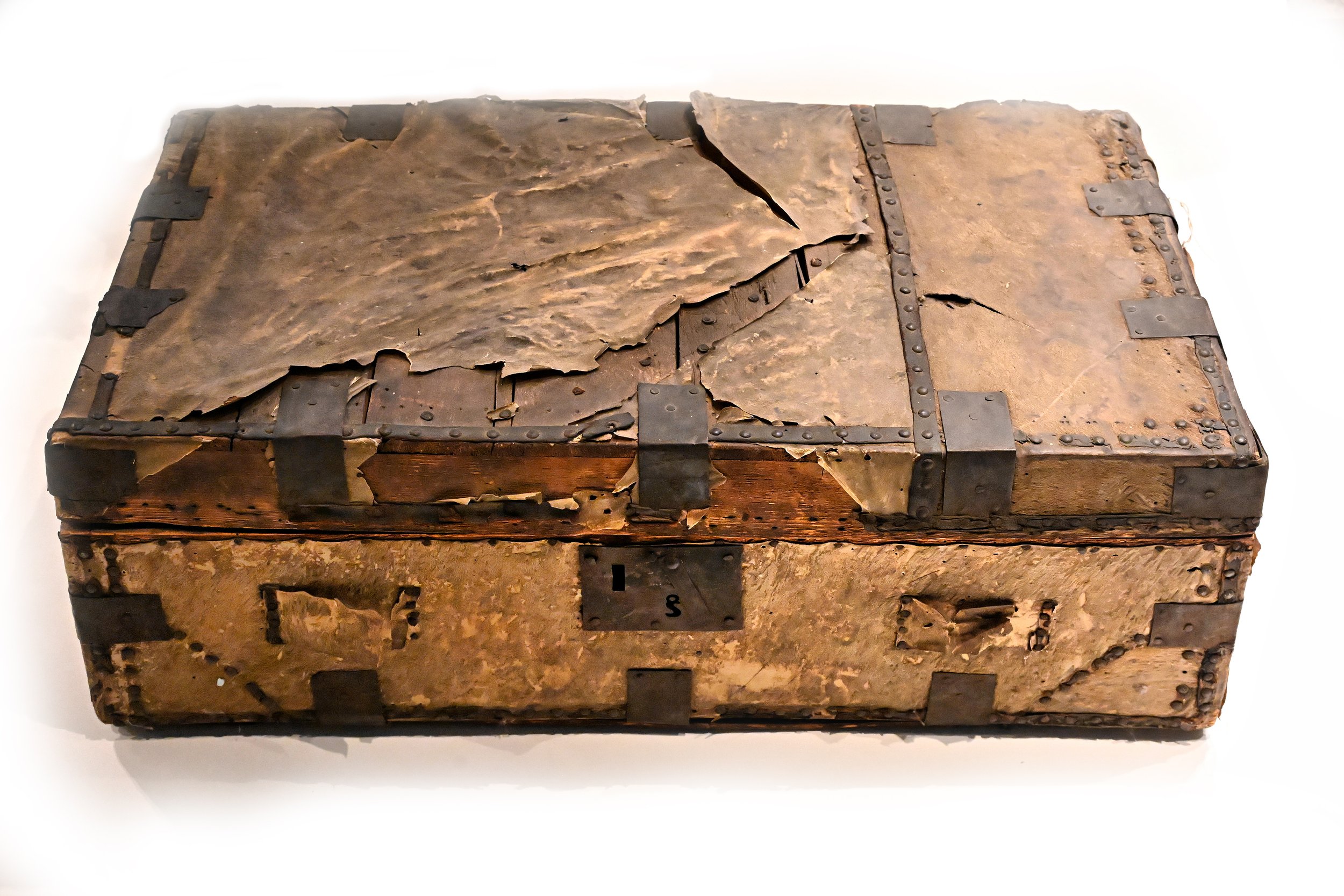
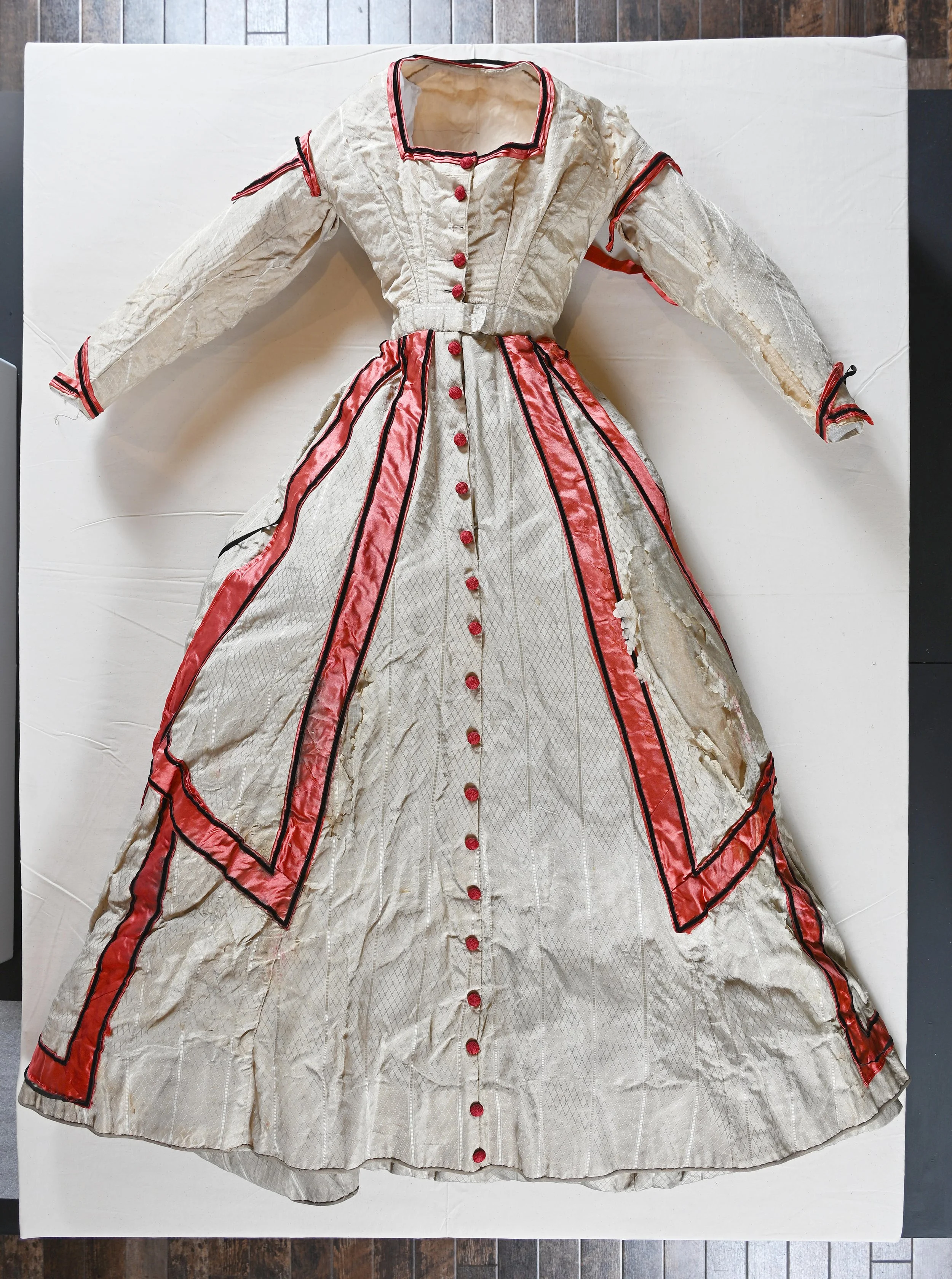
“The PoCo Muse believes that objects tell stories, and our new featured exhibit looks closely at artifacts from our Bailly Family Collection to shed new light on their legacy in Porter County,” said Jake Just, the museum’s Director of Exhibits and Publications. “An eclectic assortment of items are on display, including an eighteenth-century traveling trunk, various household utensils, Catholic devotional objects, souvenirs from a European vacation, and a gown that may have been worn to Abraham Lincoln’s Inaugural Ball.”

“While you’re at the museum, have a look at the new acquisitions and artworks from our permanent collection now on display in the Robert Cain Gallery,” added Pazour. “This small space features rotating exhibits that change frequently. It’s always worth a stop.”


A - Trunk used by Joseph Bailly during his travels

B - Rosary used by Bailly Family

C - Gown acquired to wear at Lincoln's Inaugural Ball

D - Robert Cain Gallery view of Selections from the Permanent Collection

Porter County Museum, located at 20 Indiana Avenue in downtown Valparaiso, is open six days a week, Tuesday-Sunday, from 11am to 5pm, with free admission. Free half-hour guided tours are offered on the third Saturday of each month at 10am. For more information, visit pocomuse.org or find @pocomuse on social media.