
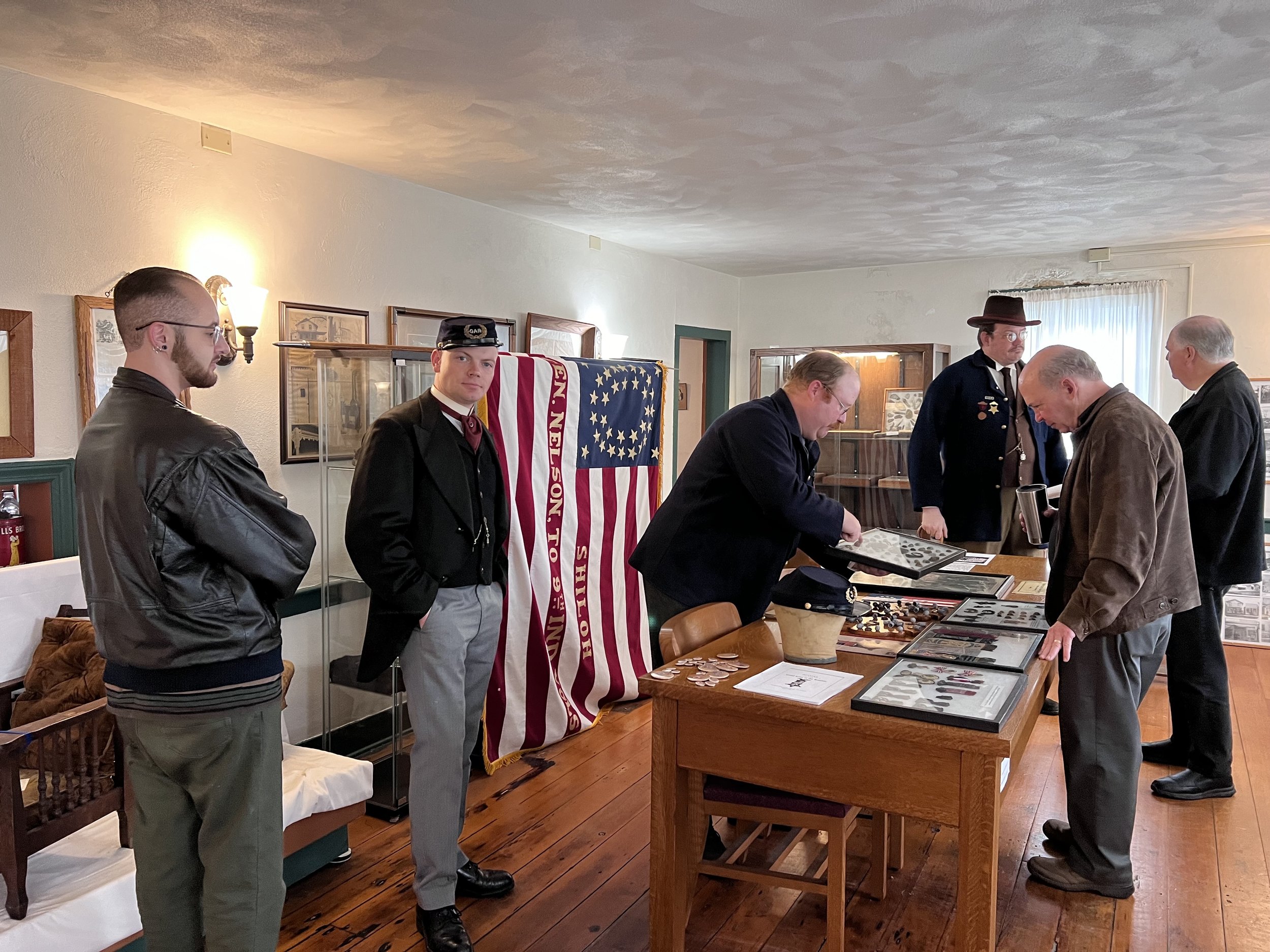

Hebron’s Stagecoach Inn at 127 N. Main Street, courtesy of Ronald Trigg
About the Stagecoach Inn & Panhandle Depot
Discover the rich history of Hebron and south Porter County through with a visit to the Stagecoach Inn & Panhandle Depot. Hebron Parks and Recreation, owner of the historic sites, plays a vital role in preserving two of Porter County’s most meaningful landmarks.
PoCo Muse is proud to partner with Hebron Parks and Recreation to bring the Stagecoach Inn & Panhandle Depot back to life, making it possible to reopen the locations to the public and share their stories with a new generation.
Join us on Saturdays between 10am to 2pm for free admission and the opportunity to explore the Stagecoach Inn and Panhandle Depot in downtown Hebron, Indiana.
Interested to visit on a day other than Saturday? Email us at info@pocomuse.org or call (219) 996-4641 and we will make every effort to accommodate your request.
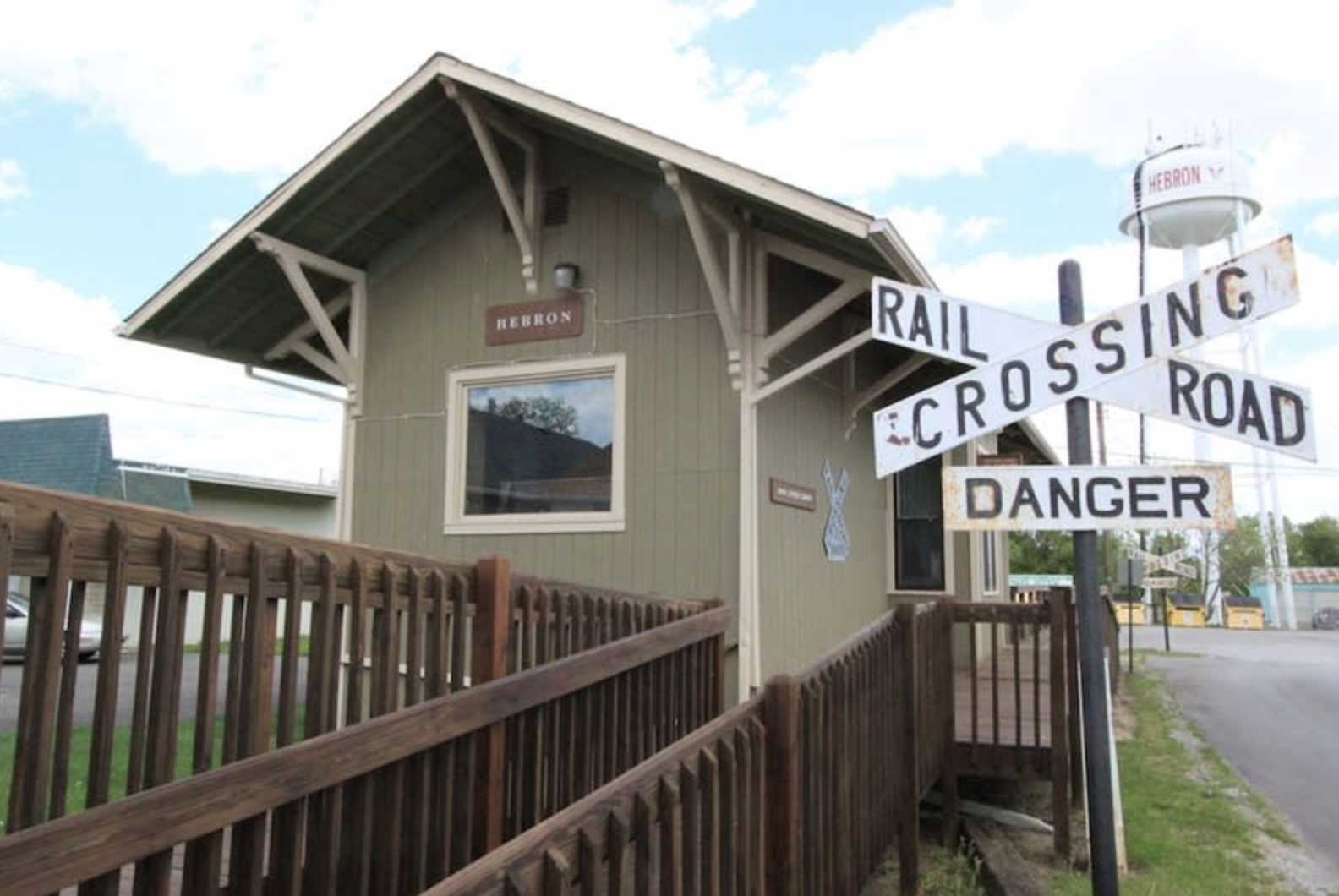
The Panhandle Depot, courtesy of Indiana Dunes Tourism
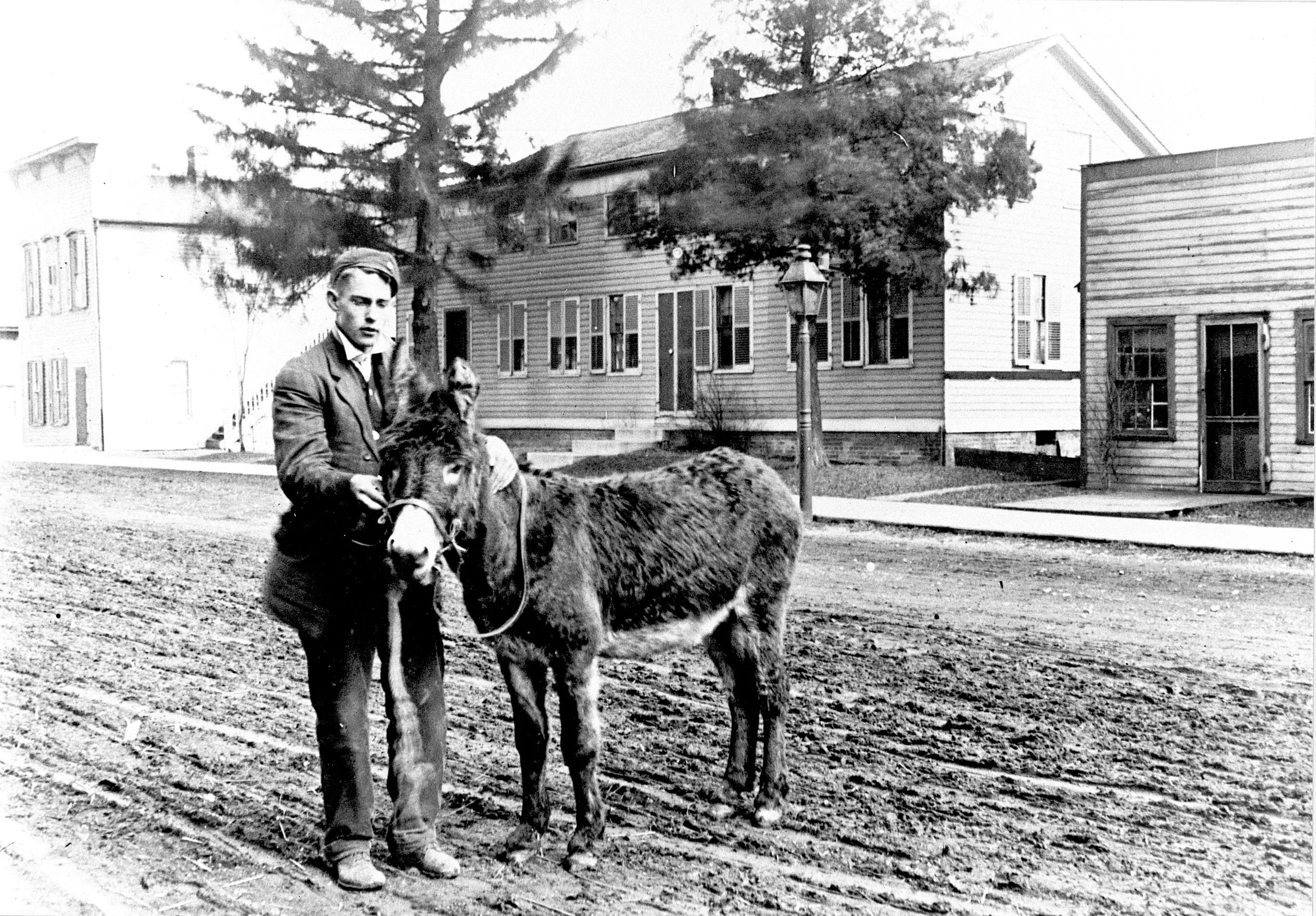
An undated image featuring the Stagecoach Inn in the background
History of the Stagecoach Inn
The Stagecoach Inn, located on the east side of Main Street in the Town of Hebron, remains one of Porter County’s most recognizable historic landmarks. Built in 1849 by James McCune, it was the town’s first frame house and features the distinctive “saltbox” design—named for its resemblance to the wooden salt containers commonly used in Colonial New England.
From its earliest days, the building served as a hub of activity. It originally operated as Hebron’s first hotel—known as the “Tavern”—and as a stop along the stagecoach route connecting Detroit, Michigan, and St. Louis, Missouri (another early story states Springfield, Illinois). Over the years, the hotel was operated by Tazwell Rice, Harvey Allen, and John Skelton. A smaller regional stage line—linking Michigan City, Valparaiso, Hebron, and Lowell—also likely used the site. Even after the railroad arrived in 1863, the location continued to welcome travelers, including sportsmen drawn to the nearby Kankakee River.
As transportation changed, so did the building’s role. It briefly served as Hebron’s Post Office before becoming a private residence around the turn of the 20th century under owner George Mosier. Throughout the years, it housed a variety of local businesses, including an ice cream parlor, dairy, and beauty shop. In the early 1930s, part of the original structure was removed to make way for a neighboring home.
A new chapter began in 1966, when businessman Louis Alyea saved the building from demolition. He envisioned the inn as both a historical museum and a memorial to Hebron residents who gave their lives in military service. In honor of his son, Sgt. Donald L. Alyea (1925–1944), who was killed during World War II on his 20th bombing mission between Foggia, Italy, and Munich, Germany, the inn also became a place of remembrance.
With the help of the community, the building was restored and filled with artifacts and photographs documenting Hebron’s past. Many items were generously donated by local residents, while others were collected by Alyea himself. The restored inn officially opened to the public in August 1970.
Since then, the Stagecoach Inn has served not only as a museum but also as a gathering place—hosting meetings, events, and private celebrations. Ongoing support from residents and volunteers continues to sustain the site and grow its collection.
Following Louis Alyea’s passing in 1989, ownership of the Stagecoach Inn was transferred to Hebron Parks and Recreation in 1990, with the understanding that it would remain a museum and community space. The department partnered with the Hebron Historical Society from 1991 to 2014 and, beginning in 2025, with the Porter County Museum to continue sharing the site’s stories.
Today, the Stagecoach Inn stands as a lasting symbol of Hebron’s heritage—a place where history is preserved, stories are shared, and the community continues to come together.
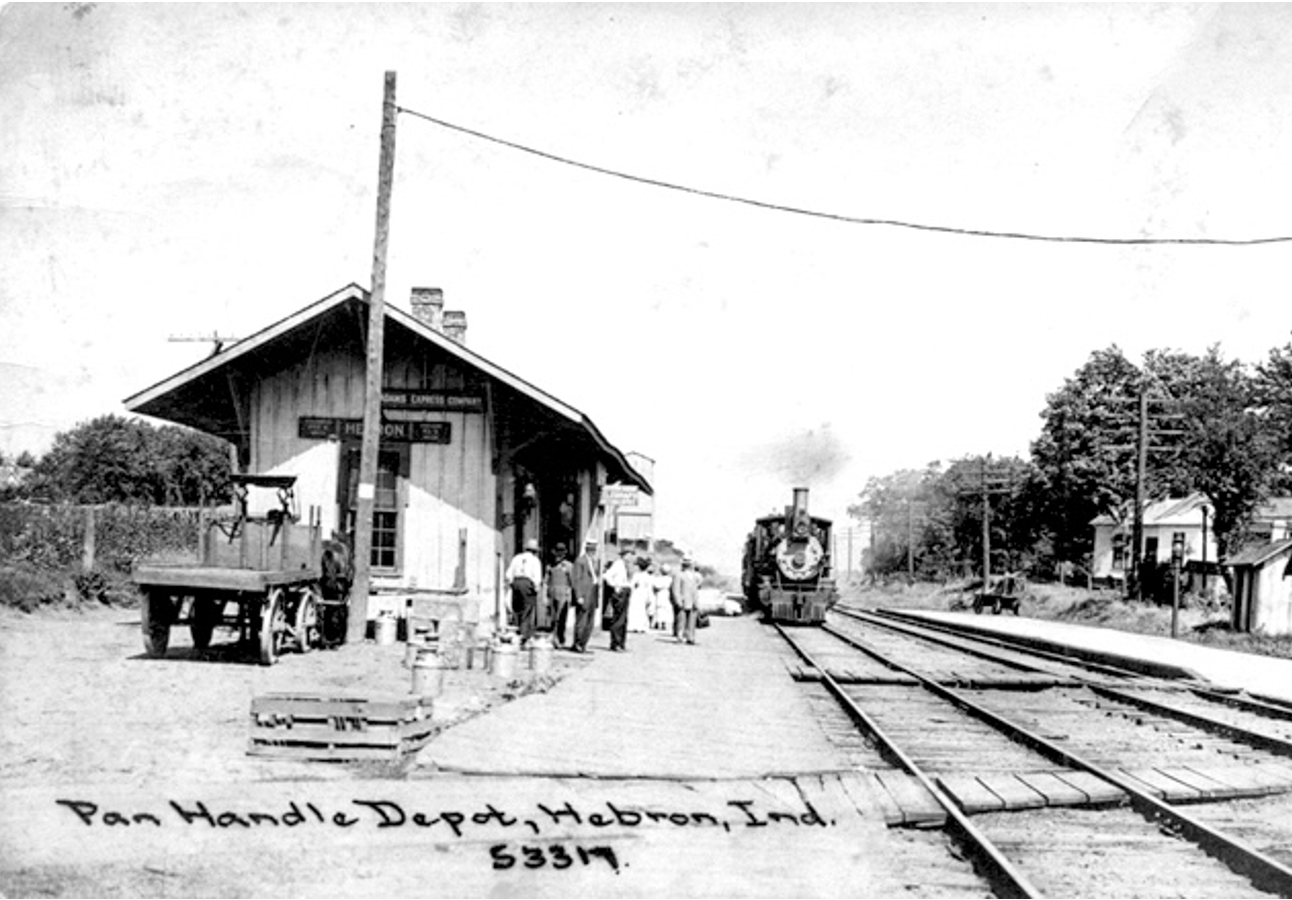
Detail of a circa 1912 postcard image featuring the Panhandle Depot in Hebron, courtesy of Steven Shook
History of the Panhandle Depot
The Panhandle Depot stands as a reminder of the vital role railroads once played in connecting communities across the Midwest. The 60-by-14-foot frame structure featured a bay window for the station agent and served as part of the busy rail line linking Logansport to Chicago.
Over the years, the railroad changed hands several times - from the Pittsburgh, Cincinnati, & St. Louis Railroad in 1865 to the Pennsylvania Railroad in 1921. Known as part of the “Pan Handle” route, this line carried well-known passenger trains such as The South Wind, The Kentuckian, and The Red Bird, connecting cities like Chicago, Louisville, and Cincinnati. In later years, early Amtrak service also ran along this route before being redirected due to track conditions.
Rail service in Hebron declined in the mid-20th century. The depot closed in the 1960s, and by 1978, rail service to the town had ended entirely. The tracks were eventually removed, marking the end of an era for local transportation.
In 1994, the building was purchased for just $1.00 from Hardee’s restaurant and relocated to save it from demolition. Originally located near what is now the intersection of Indiana Route 2 and U.S. Route 231, the depot had previously stood along Jefferson Street before being moved and expanded to its current size.
Today, the Panhandle Depot serves as a tangible link to the town’s railroad heritage - preserved so future generations can experience and appreciate this important chapter in local history.